I spent a wonderful week with my daughter and mother and grandmother - 1 week, four generations, all women - in Pittsburgh swimming and going to the zoo and being away from my daily grind. Nice, but lacking in the relaxation department. I am happy to have this memory of my grandmother playing with my daughter in the early summer sun. My time, however, was bitter sweet. So much has changed in life and knowledge and expectations that I had to bite my tongue more often than not to prevent a generational war. I yearned for that "wisdom" to reach our conversations, but, alas, in 86 years too much difference taints perceptions. I smiled and walked away and did what my maternal instincts said was correct. I snapped a few pics and looked from the outside so that my movie would capture the sentiment instead.
As I watched time pass melding history and future I learned that a friend lay weak and worn in a hospice bed, waiting out his last days in suffering. An odd fear gripped me as I dug through my long stored hey days for the memories of youth and immortality that held our shared time. I remembered his kind face and troubled emotions and days that never ended. I thought of friends long since tucked away and places and events better left in the closet of phantoms. My heart aches for him. At moments I think of him alone in his pain and confused, much like my father had been, and say a few words to the universe begging for his comfort and whisper to him all the love that so many of us have for him. I want to see him, but want to remember him as my memories do. I will contact his father today. I'm afraid to call or write. I selfishly don't want to know when he's left this place, but I want him to know it's time to move on and be free from the plagues of this world. Another kind soul, an artist, a friend, fading to the other side.
And while I cry for Mark I cringe every time a CaringBridge update arrives in my inbox. Lisa fights the moster as well. I don't know that my heart can take much more. We all watched and followed her through her breast cancer treatments, disolution of her marriage and her young boys eyes looking upon their mom with adoration and strength. We cheered as the results seemed to say she was free of the demon that assulted her. Now it has returned with a vengence powerful and cruel, engulfing all but her beautiful soul. I panic for her and want to take away all the pain. I want her boys to hold her tight and her family to give her strength. I want the dragon slayed for good. I want a miracle to shine upon her. I believe. I believe. I want to make new memories with her and our children. I want to play on the beach together as we did what feels like so long ago. I want us to laugh and dance and be free.
And now I wait, incapable of fixing, curing or relieving. I am helpless and lost myself in the whys and hows and fuck this dirty world thoughts. I think of my own feelings and fears and sadness and none are so powerful as what I feel for these friends. I start to look at the puzzle pieces of my life. I notice that where there were missing pieces, now the holes are filling in. I think of the legacy that we leave behind and how immortality is nothing more than other's memories, the imprints passed on by the living. A completed puzzle forms out of the requiem my father's voice sings for the lost souls. I will follow this song and see where it takes me.
Today my vision forms a place where I can offer help to those that suffer disabilities or illness and a place where the community can create their immortality in dance, music, art, writing, drama, and all the muses. A place that can heal or comfort and make some happiness in place of the pain. A place where children through seniors can create and explore their passions and souls. I want to bring this place to life in honor of those who I love and miss.
Showing posts with label cancer. Show all posts
Showing posts with label cancer. Show all posts
08 June 2011


25 March 2011
Time Tricks
Deep breath. Mind sorting. Another deep breath. Sigh.
Time. What a strange concept. I would say that time didn't really exist if it wasn't for the sun and moon playing peekaboo each day to night. And with the seasons warming and cooling with the leaves green to red to dead and back again. But really...what is time?
I celebrated my daughters 2nd birthday this past weekend. I was able to manage a day-long extravaganza for her with young playmates to adult smiles, lots of food and Blues Clues cake and presents that made it feel like Christmas again. I always wish that more friends and family would fit into my home and that celebrations never ended. I needed those laughs and conversations more than I knew. I understand now that my social butterfly sat beneath the bell jar for too long, and for one day that freedom simply cleared my cobwebs. Anya is older now and needs less suffocating attention. I was able to sit back and converse and have a relaxing drink and enjoy my friends and family. I was smarter this time and had food brought in and had the kids play at Gymboree so that my stress level could remain at handle-able versus overdrive.
I looked at my little baby and realized for the first time she was different to me. New in her features, the way she held herself, the tone of her voice, the exotic facial expressions, the language she was beginning to control; she was a little girl, like magic, turning two. She holds my cheeks in her hands and says, “o mommy.” She squeals with excitement and babbles a story that is half English half gremlin like she was conversing with Loreli Gilmore, then runs off into a million directions. I’m fascinated how 2 years have passed and I am lost finding those minutes, hours, and days that got me here. I am in awe of this being that came from love and grows and thrives and amazes me every moment of every day. I can’t allow myself to consider how fast forward my life will continue to morph or that I can’t protect her all the time and the anxiety as I must let her experience life. One day she parasitically melded with my body, the next she emerged as a separate entity. She will continue to grow and change and develop and make friends and enemies and make memories.
I went to a fundraiser for a dear friend, a sister of hearts, my youth’s twin. The memories came flooding back as we pull into the DQ parking lot. The line already wrapped around the door and passed the other stores. I feel my heart skip a beat and my lungs compress and my muscles tense. For a moment I allow myself to be a teenager, walking from my house around the block on Moonflower, arm in arm with my partners in fun, in the warm summer evening, hearing the gathering grow in the light breeze before twilight. We would arrive in the mini strip with enough cash for a slice of pizza from Mark’s, a medium coke, and a blizzard from DQ, carrying only a pack of smokes and gum. Inevitably the crowd of crazy teens would frighten the store owners or family-type folks that saw the potential for a mob and teens up to no good and the cops would breeze through chasing us out with little success. We would scatter, hide out in the Village Mall across the street or walk the neighborhood for a few minutes only to return and dance with the cops again. Occassionally, they would ticket the brazen of the boys for saying “fuck” or “shit” or generally cursing, a fineable offence in the 80s - at least that’s what they told us..
An eternity of summers passed in that parking lot. Some nights we were stormed on and others we melted into the pavement. But always there. Together. Being kids who wanted to be grownups who didn’t know the rules or even cared to consider them. How could we be any different? Time doesn’t exist when you’re 16…you never get old and nothing bad ever happens and all we need is each other. We gossiped and lost virginity and cried and had fights. We kissed, smoked pot and snuck beer and thought that we ruled the world. It was ours after all.
Tonight I saw familiar faces, but recognized the years, more than 20, that separated most of us. We introduced spouses and children and suddenly two decades vanished, but reflected a different universe. We crowded the parking lot and filled the air with chatter. Old man winter blasted the evening air with a spring cold snap near freezing, making the ice cream event seem odd, yet you felt the determination that we wouldn’t consider being chilled out of our purpose. My eyes shifted back and forth scanning the crowd for my partners, my friends, my strength, fearing that I couldn’t accept what time was doing to pieces of my heart.
Once we settled in the back of the line, three stores down the strip, I looked up and in an instant saw her. She looked strong and radiant and beautiful as ever. Each hope she saw in the gathering made her seem taller and more grounded, yet overwhelmed. I couldn’t wait in the back for the feet to shuffle close enough to touch her fortitude. I left Rich and Anya to hold our place and held my breath in fear that she was leaving not greeting, I had to grip my panic and urgency. I couldn’t let another minute pass without holding her close and trying to take away all the suffering and pain she experienced. My bff stood there teary-eyed holding the gatherers tight for herself, and even more so for them.
I saw her brother leaning against the DQ window. He shadowed her and stood like he always did: strong and protective and imposing. He was the best big brother a girl could want. And seeing him there, knowing that he couldn’t protect his little sis from her disease, made our hug hello bittersweet. I didn’t know what to say, and felt apologetic for life putting years between our inseparable memories, but we are grown up now, and we know that love doesn’t tell time. I missed this other family of mine and I hate seeing them again under such stressful circumstances. I hated that even though we all stood there, crowding the parking lot of our childhood haunt, the warp of time had screwed it all up: it was cold and orderly and sedate.
Finally I wrapped my arms around her back and worked the smile of warmth that came over me. We hugged and cried and held each other up. I didn’t want to let her go. I could have stood there an eternity cleansing the demons from her. Her sorrow broke my heart and I wanted everyone and everything and all this suffering to disappear. I wanted to be back at the shore on Memorial Day weekend in our bikinis and a case of beer and the boardwalk after hours on the beach. I wanted to pick her up for a cruise through town on a Friday night and a party. I wanted to skip across the carnival with her, laughing and believing that nothing could tarnish our happiness. I wanted to beat and maim all that caused her hurt. I wanted her to know that I loved her so much and that I know that we have plenty more memories to make together and that life works in strange ways and to never let go her strength and hope and love.
Slowly the hum and buzz of the crowded lot broke through. People were hungrily waiting to donate their strength and health and I wanted her to take as much as her body needed to fight. I got back in line with my husband and daughter and let myself breathe in and out slowly. I couldn’t make sense of the upside down vortex that we were sharing in this place of happy memories. I knew not to try.
After our ice cream treat and Anya anxiously wanting to be free of the crowded inside of DQ we went back outside to see more phantoms of my memories continue to arrive. I looked over and saw my surrogate mom beam at the crowds gathered for her daughter. Now, a mother myself, I felt something new for this woman whom had been an integral matriarchal figure in my youth. I felt her hurt and her need to protect and confusion over her baby girl growing up and being consumed by a disease that we still understand so little about. I want her to know that I love her so much and want to help her in any way that I can that she will allow me. I don’t want her to burn up from the stress and pain. I know what she feels as the caregiver.
I circled the lot a few times confused and lost. My husband gently reminded me that it was time to go, and that he and Anya would be waiting in the car. I am grateful for his nudge and direction; otherwise, I may have taken up the block and walked into a stranger’s house that I once called home. I waited for her to catch her breath in between supporters and took my chance to hold her tight again. This time I wanted her to know that on good days and bad days and all of them in between I was here for her. We are sister and we stick together. We cried some more and hugged even tighter, but we knew that I had to go or we would never leave that moment. I had to share her with all of the other loves there for her tonight, and this whole week. I wanted her to be healed by the love that we all brought her. I kissed her hand as we reluctantly let go, waved a quick goodbye to her family, and ran for the car and to breathe again.
I can easily look back on last night and know that my mind was unable to close on time’s tricks. There I was in a place with people that bring back summer breezes and laughter to my heart, but none of us could hide from the sober reason we all amassed. The location was fitting and familiar. We could use the ghosts of our youth to strengthen and reclaim her health. She will fight and we will fight with her. We won’t let time dictate how we perceive or use or experience life. It’s ours after all.
Time. What a strange concept. I would say that time didn't really exist if it wasn't for the sun and moon playing peekaboo each day to night. And with the seasons warming and cooling with the leaves green to red to dead and back again. But really...what is time?
I celebrated my daughters 2nd birthday this past weekend. I was able to manage a day-long extravaganza for her with young playmates to adult smiles, lots of food and Blues Clues cake and presents that made it feel like Christmas again. I always wish that more friends and family would fit into my home and that celebrations never ended. I needed those laughs and conversations more than I knew. I understand now that my social butterfly sat beneath the bell jar for too long, and for one day that freedom simply cleared my cobwebs. Anya is older now and needs less suffocating attention. I was able to sit back and converse and have a relaxing drink and enjoy my friends and family. I was smarter this time and had food brought in and had the kids play at Gymboree so that my stress level could remain at handle-able versus overdrive.
I looked at my little baby and realized for the first time she was different to me. New in her features, the way she held herself, the tone of her voice, the exotic facial expressions, the language she was beginning to control; she was a little girl, like magic, turning two. She holds my cheeks in her hands and says, “o mommy.” She squeals with excitement and babbles a story that is half English half gremlin like she was conversing with Loreli Gilmore, then runs off into a million directions. I’m fascinated how 2 years have passed and I am lost finding those minutes, hours, and days that got me here. I am in awe of this being that came from love and grows and thrives and amazes me every moment of every day. I can’t allow myself to consider how fast forward my life will continue to morph or that I can’t protect her all the time and the anxiety as I must let her experience life. One day she parasitically melded with my body, the next she emerged as a separate entity. She will continue to grow and change and develop and make friends and enemies and make memories.
I went to a fundraiser for a dear friend, a sister of hearts, my youth’s twin. The memories came flooding back as we pull into the DQ parking lot. The line already wrapped around the door and passed the other stores. I feel my heart skip a beat and my lungs compress and my muscles tense. For a moment I allow myself to be a teenager, walking from my house around the block on Moonflower, arm in arm with my partners in fun, in the warm summer evening, hearing the gathering grow in the light breeze before twilight. We would arrive in the mini strip with enough cash for a slice of pizza from Mark’s, a medium coke, and a blizzard from DQ, carrying only a pack of smokes and gum. Inevitably the crowd of crazy teens would frighten the store owners or family-type folks that saw the potential for a mob and teens up to no good and the cops would breeze through chasing us out with little success. We would scatter, hide out in the Village Mall across the street or walk the neighborhood for a few minutes only to return and dance with the cops again. Occassionally, they would ticket the brazen of the boys for saying “fuck” or “shit” or generally cursing, a fineable offence in the 80s - at least that’s what they told us..
An eternity of summers passed in that parking lot. Some nights we were stormed on and others we melted into the pavement. But always there. Together. Being kids who wanted to be grownups who didn’t know the rules or even cared to consider them. How could we be any different? Time doesn’t exist when you’re 16…you never get old and nothing bad ever happens and all we need is each other. We gossiped and lost virginity and cried and had fights. We kissed, smoked pot and snuck beer and thought that we ruled the world. It was ours after all.
Tonight I saw familiar faces, but recognized the years, more than 20, that separated most of us. We introduced spouses and children and suddenly two decades vanished, but reflected a different universe. We crowded the parking lot and filled the air with chatter. Old man winter blasted the evening air with a spring cold snap near freezing, making the ice cream event seem odd, yet you felt the determination that we wouldn’t consider being chilled out of our purpose. My eyes shifted back and forth scanning the crowd for my partners, my friends, my strength, fearing that I couldn’t accept what time was doing to pieces of my heart.
Once we settled in the back of the line, three stores down the strip, I looked up and in an instant saw her. She looked strong and radiant and beautiful as ever. Each hope she saw in the gathering made her seem taller and more grounded, yet overwhelmed. I couldn’t wait in the back for the feet to shuffle close enough to touch her fortitude. I left Rich and Anya to hold our place and held my breath in fear that she was leaving not greeting, I had to grip my panic and urgency. I couldn’t let another minute pass without holding her close and trying to take away all the suffering and pain she experienced. My bff stood there teary-eyed holding the gatherers tight for herself, and even more so for them.
I saw her brother leaning against the DQ window. He shadowed her and stood like he always did: strong and protective and imposing. He was the best big brother a girl could want. And seeing him there, knowing that he couldn’t protect his little sis from her disease, made our hug hello bittersweet. I didn’t know what to say, and felt apologetic for life putting years between our inseparable memories, but we are grown up now, and we know that love doesn’t tell time. I missed this other family of mine and I hate seeing them again under such stressful circumstances. I hated that even though we all stood there, crowding the parking lot of our childhood haunt, the warp of time had screwed it all up: it was cold and orderly and sedate.
Finally I wrapped my arms around her back and worked the smile of warmth that came over me. We hugged and cried and held each other up. I didn’t want to let her go. I could have stood there an eternity cleansing the demons from her. Her sorrow broke my heart and I wanted everyone and everything and all this suffering to disappear. I wanted to be back at the shore on Memorial Day weekend in our bikinis and a case of beer and the boardwalk after hours on the beach. I wanted to pick her up for a cruise through town on a Friday night and a party. I wanted to skip across the carnival with her, laughing and believing that nothing could tarnish our happiness. I wanted to beat and maim all that caused her hurt. I wanted her to know that I loved her so much and that I know that we have plenty more memories to make together and that life works in strange ways and to never let go her strength and hope and love.
Slowly the hum and buzz of the crowded lot broke through. People were hungrily waiting to donate their strength and health and I wanted her to take as much as her body needed to fight. I got back in line with my husband and daughter and let myself breathe in and out slowly. I couldn’t make sense of the upside down vortex that we were sharing in this place of happy memories. I knew not to try.
After our ice cream treat and Anya anxiously wanting to be free of the crowded inside of DQ we went back outside to see more phantoms of my memories continue to arrive. I looked over and saw my surrogate mom beam at the crowds gathered for her daughter. Now, a mother myself, I felt something new for this woman whom had been an integral matriarchal figure in my youth. I felt her hurt and her need to protect and confusion over her baby girl growing up and being consumed by a disease that we still understand so little about. I want her to know that I love her so much and want to help her in any way that I can that she will allow me. I don’t want her to burn up from the stress and pain. I know what she feels as the caregiver.
I circled the lot a few times confused and lost. My husband gently reminded me that it was time to go, and that he and Anya would be waiting in the car. I am grateful for his nudge and direction; otherwise, I may have taken up the block and walked into a stranger’s house that I once called home. I waited for her to catch her breath in between supporters and took my chance to hold her tight again. This time I wanted her to know that on good days and bad days and all of them in between I was here for her. We are sister and we stick together. We cried some more and hugged even tighter, but we knew that I had to go or we would never leave that moment. I had to share her with all of the other loves there for her tonight, and this whole week. I wanted her to be healed by the love that we all brought her. I kissed her hand as we reluctantly let go, waved a quick goodbye to her family, and ran for the car and to breathe again.
I can easily look back on last night and know that my mind was unable to close on time’s tricks. There I was in a place with people that bring back summer breezes and laughter to my heart, but none of us could hide from the sober reason we all amassed. The location was fitting and familiar. We could use the ghosts of our youth to strengthen and reclaim her health. She will fight and we will fight with her. We won’t let time dictate how we perceive or use or experience life. It’s ours after all.
25 February 2011
Αἰωνία ἡ μνήμη (Eternal Memory) Chapter 4
hold on to me love
you know i can't stay long
all i wanted to say was i love you and i'm not afraid
can you hear me?
can you feel me in your arms?
holding my last breath
safe inside myself
are all my thoughts of you
sweet raptured light it ends here tonight
- Evanescence
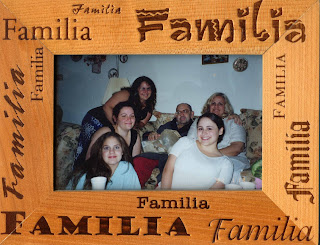
My father, my daddy, who has been lost to me until the past year, has again left me…this time forever. He’s dead, damn it, dead! My mind screams, “Why?!” over and over again, yet no one offers an answer that I can accept.
My father died on Sunday, August 1st. He died in the cold, sanitary hospital not his warm and comforting room at home. This fact disturbs me just as much as all the others. You see, he wanted to be at home.
On Friday, we rushed him into the emergency room because he was having difficulty breathing. It was a very frightening night. It was almost 11 o’clock or so and I had just come home from coffee with Kimberly. I was excited to be home because I knew that my aunt Elaine would be there. She’s my most favorite aunt and I was glad that I would be able to visit with her for a few days. No sooner had I given her a hug hello and sat down to chat when I heard my mother’s anxious voice yell down the stairs. I could sense the worry in her call and darted up the steps instead of returning with a holler.
When I reached my parents bedroom everything looked normal, but felt unsettling. My mother’s pupils were large. Her eyes darted back and forth. Her hair had a static halo. Panic. My father sat in his oversized armchair in the corner. As my breath calmed from running up the stairs my heart slowed its pounding in my ears, then I heard it. I was a grotesque gurgling sound, resonating from my father, a rattle (later we learned that it was the combination of pneumonia and the tiny pinhole opening in my father’s esophagus).
I went over to his side and gave my father a kiss on his forehead as I had done so many times before. He touched my arm in recognition. I held my father’s hand nervously. I kept running my fingers over his and rubbed his back with my other hand. The nurse my mother called told us to get my father to the hospital for oxygen.
My father didn’t want to go. He started to panic; he wanted to go to the bathroom so we helped him. He tried and tried but nothing came. I helped him walk back to his chair only to be asked to take him back to the bathroom again. My mother ran around the room gathering pajamas and robe and slippers, medicines. My aunt was getting caught up in the insanity too. She woke up my other sisters to tell them what was going on, but that it would be better for them to wait at home than to all pace around in the hospital waiting room for god knows how long. My youngest sister, who was still awake, just stood there confused, watching us all run around in shock.
Once everything was together it was time to get my father down the steps and out into the car. None of us had any idea how we were going to accomplish this task. My mother and I helped my father to the top of the steps one on each side of him, but that wasn’t an option for going down. Through his gurgled breathing and paralyzed vocal cords my father’s rough whisper said, “I’m going down on my butt.” My mother, my aunt, and I simultaneously looked at my dad then at each other and let out a giggle. Through all of the craziness we found a bit of light-heartedness. My mother got in front while we helped my father into a seated position on the top of the steps. I sat down next to my father’s frail body, put my left arm around his back, and held his right hand with mine.
“Okay, dad. Whenever you’re ready. No hurry,” I said holding my breath, waiting for him to say that he couldn’t do it.
“On the count of three we’ll go,” my father replied in a harsh whisper.
“One…(I rubbed his back)…two… (I clenched his hand tighter)…three.” Thump!
And that’s the way we went down the next twelve steps. He was a child again, and it was his last childhood game.
We got him into my mom’s mini-van. I tucked his robe in from the door and fixed his positioning in the seat. I gave him a big kiss on the forehead and told him that I would follow in my car.
“Thank you honey, thank you,” he said and let a tear roll down his cheek.
“No I’m not going to cry,” I said, half to myself half to the warm night air. This couldn’t be it, I thought to myself. We’ll get him to the hospital and they’ll fix him and send him home. My aunt offered to drive but I insisted. I’m more like my father than I ever believed. My mom sped up the street while my aunt and I were still fastening our seat belts. My aunt tried to help me relax, joking that she hadn’t planned on such an exciting visit and how this would be the latest she’d stayed up in years. I cracked a few smiles and went the same direction my mother had only moments before.
We were driving down Crestview, two blocks away from my house, and the sky caught my attention. Initially focusing on the object above me I saw a shooting star, but unlike a brief trail in the sky, it didn’t disappear when I blinked. Instead a ball of fire glared at me revealing a twinkling, sparkling tail. It looked like it was directly in front of me but above the horizon. I held my breath and blurted out, “Oh my God! Did you see that?...we’re still alive right?” It had dawned on me that what I had seen was a really large meteorite that had broken through the atmosphere. August is the month of meteor showers so this was feasible to believe, but highly unlikely that someone would actually witness.
“What are you talking about, Renee, I didn’t see a thing. Are you sure you don’t want me to drive?” was my aunt’s reply.
“No, no, I’m ok. I don’t think I was hallucinating. I hope that wasn’t a bad omen.”
“You’re nuts, kiddo.” My aunt snickered.
Superstitious, yes, I am. To me this translated to the angels coming to take someone home with them. The rest of the ride to the hospital I kept telling myself that it wasn’t his time…I’m just nuts, me and my dumb superstitions. The rest of the ride was spent in silence.
Once at the hospital my aunt and I chain smoked outside the automatic ER door -- buzz…buzz…buzz -- a steady open and close, normal for a Friday night. To lighten our heavy thoughts my aunt cracked jokes about my superstitions, and periodically checked the waiting room TV for news of my “meteorite” – my aunt will never let me live this one down. I kept asking the nurses if I could go back to where my father lay, but they kept telling me not to worry, they’d let me know when I could go back or if anything was critical. Hours went by and not even my mother came out to the waiting room.
At five thirty my mother finally came out to us. The expression on her face was a solemn one. I had expected some sign of relief as an indication that all would be well soon or at least some sign that it wasn’t time yet. But I got none. Instead she explained that not one of the doctors that had been in to see him could understand what was going on. She wanted me to go in to see him and then go home and come back with my sisters after a few hours sleep. She looked terrified and offered me no comfort.
When I walked into his room, I saw the two nurses off to the side, preparing needles and medication for my father’s IVs. Instead of a reassuring smile from him, I was greeted by an ashen complexion and a vacant stare. His gurgled breathing was now accompanied by beeps and buzzes from the machines recently connected to various body parts. The nurses didn’t even look me in the eye when they saw me go up to my father’s bedside.
I grabbed his hand in mine and stroked the fuzzy hair on his head. I bent down and placed a kiss gently on his cheek this time and said, “I love you, Daddy.” He moved his other, working hand over mine and said, “I love you too. Remember you’re my angel.”
I just stood there hoping that in some miraculous way I could give him some of my strength and energy. I could feel him slipping away and I wanted to stop it. Just outside his room I could hear the nurses talking to the doctor then they called my mother out. I couldn’t quite make out what they were telling her, their voices were too low. I watched all the legs walk away from under the drawn curtain, but my mother’s remained: she was composing herself before she came back in.
“Maria…Maria…” came hoarsely out of my father, “tell me, please, tell me what they said. I have to know.”
“They don’t know, George. They are still running some tests.”
My father pulled me close and I could see the tears welling in his eyes.
“Renee, honey, I think this is it. I can feel it. Please…go home and get some rest and bring all the girls back. I want to talk to all of you. Please, it’s ok. I love you honey.”
“You know I am so proud of you. I don’t know what I would have done without you all these months. You’re my angel never forget that. Go home now, ok.”
My aunt walked me outside and gave me a hug.
There was a dense fog distorting the outside world, shadows marked buildings and white eyes crept along the street. The sun peaked through above the horizon, casting an eerie glow. Birds chirped and tweeted, echoing through the mists; they too seemed to be haunted and haunting under cover of the fog. I got in my car and drove slowly home in the surreal morning.
Once home I went into my parent’s room and curled up on my father’s sheet-protected, over-sized recliner. I couldn’t stop the tears. I wanted to pretend that I was a child curled in my father’s arms. I wanted all of the terrible adolescent memories washed away, all the arguments and hurtful words swept away in the flood. I wanted only to have known my father as the man I knew now. They seemed like two different people; one a harsh, strict dictator, an ugly monster; the other a loving, caring, strong man, my daddy. Why did it have to come to his cancer becoming terminal for us to make peace with each other and our individual natures? It wasn’t fair. It isn’t fair.
I awoke at ten o’clock, hearing my mother and aunt come in the front door and smelled eggs and bacon in the frying pan. My mother looked worn and disheveled: eyes swollen, Einstein hair, and her body slumped. She said that the doctors were more at ease because he had made it through the night and actually seemed a bit better. She told us what room he was in and staggered up to bed.
The four of us, my sisters and I, rode silently to the hospital. We found my father awake and waiting for us. His face lit up as we walked in and stood two on each side of his bed. He had prepared himself to speak to each one of us a special message, holding our hands in turn.
“I’m so happy that all of you are here together. You’re my girls and I hope you know how much I love you all. I am proud of all of you.
“Renee, you know how much I feel for you. You’ve been the best that I could have ever asked for. I know you’re my angel. I know that you are strong and smart and will take good care of yourself and everyone else. Take care of our family.
“Erica, I’m so proud of the beautiful music you play. You’ve worked very hard and done very well. You’re a good girl. It will be alright. You will do well for yourself doing what you love most. And even if you don’t believe it, I’ve always supported you.
“Chrissy, honey, I’m so sorry that I couldn’t finish getting you through school. You are so intelligent I know you will find a way. You’re a strong girl. I’m sorry that things turned out this way.
“Connie, oh my Connie, I am afraid that you have gotten the worst of this. There is nothing I can say that will make things better. You are a wonderful artist and fantastic with karate. They will help you sweetheart. I hope that you can forgive me.
“All of you, I love you so much. I know that you will be ok because you are all so strong. I know that if ever you need anything Renee will be able to help you. Please, take care of your mother. I love her dearly and always have. I want you to be good to her and help her. You are all so beautiful and smart…you are my wonderful girls. I love you.”
All of us had planned on spending the day with him. We brought books to read while he was sleeping and coloring books to keep us occupied; we were like his children again, playing in innocence, keeping a proud father company during the long hours of a weekend. We wanted to laugh with him and put on a show like we used to as young children at family gatherings. We cracked jokes to (and about) one another, making my father laugh. We reminisced about times past. And with each tale, my father’s eyes sparkled, small bits of his life energy.
After a few hours my mother and aunt came back. They seemed rested and refreshed and were tickled when they saw the laughter filling my father’s room. The nurses always hesitated when they passed, catching a glimpse of this family, who were fighting to make life win. We had seven people squished into a tiny room, yet the room appeared large, overflowing with love.
A few more hours passed and everyone else left for a while except me and Chrissy. My father seemed tired so we quieted down and let him sleep. Seeing the doctor walk past the room, I ran out to talk to her. I had hoped that since the day seemed so good that she would bring me good news as well.
“Doctor…doctor, hi, look I was wondering…how are things…I mean really how are things? Is it hours, days, weeks? Can you tell me?”
“Well, I don’t know anything for certain, but right now everything looks good. I plan on sending him home in a couple of days…I expect a few weeks, but they will get progressively worse. Hang in there, okay?”
Relief. I thought that for at least this time the worst had passed. I went back into his room and sat down to read when friends began arriving. My father woke up now and then to visit with familiar faces and shared some more giggles and smiles, but he was more tired each time and went to sleep sooner. My friends, and friends of each of my sisters, flowed in and out of my father’s room, a parade of the extended family. The family my father had grown to cherish, reminiscing how time had kissed his family with strength and comfort, surrounded by loved ones.
Over time I noticed his forehead beading with sweat. I went to the bathroom and moistened towels to pat and wipe his forehead and neck. “Thank you, honey, thank you.” And he kissed my hand. I noticed that every twenty minutes or so he needed me to wipe him down again and I was much obliged to do so. I wanted him to be comfortable and know that I was there for him. Over the past months as he gotten worse he wanted me there with him. He always wanted to know where I was going and when I’d be home. He needed to know because he said, “I always felt safe when you’re with me.” That is why he called me his angel; he said that I protected him and that somehow I always knew just what to say and do to make him feel better. On days that he was feeling worse or had too much pain or was really sad, he would always ask me to stay with him. He would say, “Please don’t leave me right now” or “don’t leave me alone, please, don’t leave me alone.” I wanted him to know that while he lay in that hospital bed that I wouldn’t leave him. I was there for him. I would protect him.
Around 8:30 pm Erica came back to the hospital with her best friend Rosie. The day nurse was just getting ready to leave and decided to check in on my father to say goodnight.
“My heavens, Mr. Pappas, how many daughters do you have?! I’ve seen at least seven in and out of here today.”
“Oh no,” he smirked, “I only have four, but I guess I have a very extended family.”
“Goodnight, Mr. Pappas.”
When she left the room we all started laughing. We decided that my father through the years had acquired at least 14 surrogate children, and all of them daughters.
My father turned to me while I was wiping his forehead again and said it was time for me to go home and get some rest. He said that he had a wonderful day and wanted me to go and relax. We would visit again the next day. I protested a big, "But…” then I realized my exhaustion and relented.
“Are you sure, Daddy? I could take Chrissy home and come back.”
“No, honey, you go home now. I love you, ok my angel.”
“Ok, Daddy, I love you too.” I kissed him on the cheek and he kissed mine. Then I leaned over, hugged him tight, said “I love you, Daddy” one more time, and left.
you know i can't stay long
all i wanted to say was i love you and i'm not afraid
can you hear me?
can you feel me in your arms?
holding my last breath
safe inside myself
are all my thoughts of you
sweet raptured light it ends here tonight
- Evanescence

My father, my daddy, who has been lost to me until the past year, has again left me…this time forever. He’s dead, damn it, dead! My mind screams, “Why?!” over and over again, yet no one offers an answer that I can accept.
My father died on Sunday, August 1st. He died in the cold, sanitary hospital not his warm and comforting room at home. This fact disturbs me just as much as all the others. You see, he wanted to be at home.
On Friday, we rushed him into the emergency room because he was having difficulty breathing. It was a very frightening night. It was almost 11 o’clock or so and I had just come home from coffee with Kimberly. I was excited to be home because I knew that my aunt Elaine would be there. She’s my most favorite aunt and I was glad that I would be able to visit with her for a few days. No sooner had I given her a hug hello and sat down to chat when I heard my mother’s anxious voice yell down the stairs. I could sense the worry in her call and darted up the steps instead of returning with a holler.
When I reached my parents bedroom everything looked normal, but felt unsettling. My mother’s pupils were large. Her eyes darted back and forth. Her hair had a static halo. Panic. My father sat in his oversized armchair in the corner. As my breath calmed from running up the stairs my heart slowed its pounding in my ears, then I heard it. I was a grotesque gurgling sound, resonating from my father, a rattle (later we learned that it was the combination of pneumonia and the tiny pinhole opening in my father’s esophagus).
I went over to his side and gave my father a kiss on his forehead as I had done so many times before. He touched my arm in recognition. I held my father’s hand nervously. I kept running my fingers over his and rubbed his back with my other hand. The nurse my mother called told us to get my father to the hospital for oxygen.
My father didn’t want to go. He started to panic; he wanted to go to the bathroom so we helped him. He tried and tried but nothing came. I helped him walk back to his chair only to be asked to take him back to the bathroom again. My mother ran around the room gathering pajamas and robe and slippers, medicines. My aunt was getting caught up in the insanity too. She woke up my other sisters to tell them what was going on, but that it would be better for them to wait at home than to all pace around in the hospital waiting room for god knows how long. My youngest sister, who was still awake, just stood there confused, watching us all run around in shock.
Once everything was together it was time to get my father down the steps and out into the car. None of us had any idea how we were going to accomplish this task. My mother and I helped my father to the top of the steps one on each side of him, but that wasn’t an option for going down. Through his gurgled breathing and paralyzed vocal cords my father’s rough whisper said, “I’m going down on my butt.” My mother, my aunt, and I simultaneously looked at my dad then at each other and let out a giggle. Through all of the craziness we found a bit of light-heartedness. My mother got in front while we helped my father into a seated position on the top of the steps. I sat down next to my father’s frail body, put my left arm around his back, and held his right hand with mine.
“Okay, dad. Whenever you’re ready. No hurry,” I said holding my breath, waiting for him to say that he couldn’t do it.
“On the count of three we’ll go,” my father replied in a harsh whisper.
“One…(I rubbed his back)…two… (I clenched his hand tighter)…three.” Thump!
And that’s the way we went down the next twelve steps. He was a child again, and it was his last childhood game.
We got him into my mom’s mini-van. I tucked his robe in from the door and fixed his positioning in the seat. I gave him a big kiss on the forehead and told him that I would follow in my car.
“Thank you honey, thank you,” he said and let a tear roll down his cheek.
“No I’m not going to cry,” I said, half to myself half to the warm night air. This couldn’t be it, I thought to myself. We’ll get him to the hospital and they’ll fix him and send him home. My aunt offered to drive but I insisted. I’m more like my father than I ever believed. My mom sped up the street while my aunt and I were still fastening our seat belts. My aunt tried to help me relax, joking that she hadn’t planned on such an exciting visit and how this would be the latest she’d stayed up in years. I cracked a few smiles and went the same direction my mother had only moments before.
We were driving down Crestview, two blocks away from my house, and the sky caught my attention. Initially focusing on the object above me I saw a shooting star, but unlike a brief trail in the sky, it didn’t disappear when I blinked. Instead a ball of fire glared at me revealing a twinkling, sparkling tail. It looked like it was directly in front of me but above the horizon. I held my breath and blurted out, “Oh my God! Did you see that?...we’re still alive right?” It had dawned on me that what I had seen was a really large meteorite that had broken through the atmosphere. August is the month of meteor showers so this was feasible to believe, but highly unlikely that someone would actually witness.
“What are you talking about, Renee, I didn’t see a thing. Are you sure you don’t want me to drive?” was my aunt’s reply.
“No, no, I’m ok. I don’t think I was hallucinating. I hope that wasn’t a bad omen.”
“You’re nuts, kiddo.” My aunt snickered.
Superstitious, yes, I am. To me this translated to the angels coming to take someone home with them. The rest of the ride to the hospital I kept telling myself that it wasn’t his time…I’m just nuts, me and my dumb superstitions. The rest of the ride was spent in silence.
Once at the hospital my aunt and I chain smoked outside the automatic ER door -- buzz…buzz…buzz -- a steady open and close, normal for a Friday night. To lighten our heavy thoughts my aunt cracked jokes about my superstitions, and periodically checked the waiting room TV for news of my “meteorite” – my aunt will never let me live this one down. I kept asking the nurses if I could go back to where my father lay, but they kept telling me not to worry, they’d let me know when I could go back or if anything was critical. Hours went by and not even my mother came out to the waiting room.
At five thirty my mother finally came out to us. The expression on her face was a solemn one. I had expected some sign of relief as an indication that all would be well soon or at least some sign that it wasn’t time yet. But I got none. Instead she explained that not one of the doctors that had been in to see him could understand what was going on. She wanted me to go in to see him and then go home and come back with my sisters after a few hours sleep. She looked terrified and offered me no comfort.
When I walked into his room, I saw the two nurses off to the side, preparing needles and medication for my father’s IVs. Instead of a reassuring smile from him, I was greeted by an ashen complexion and a vacant stare. His gurgled breathing was now accompanied by beeps and buzzes from the machines recently connected to various body parts. The nurses didn’t even look me in the eye when they saw me go up to my father’s bedside.
I grabbed his hand in mine and stroked the fuzzy hair on his head. I bent down and placed a kiss gently on his cheek this time and said, “I love you, Daddy.” He moved his other, working hand over mine and said, “I love you too. Remember you’re my angel.”
I just stood there hoping that in some miraculous way I could give him some of my strength and energy. I could feel him slipping away and I wanted to stop it. Just outside his room I could hear the nurses talking to the doctor then they called my mother out. I couldn’t quite make out what they were telling her, their voices were too low. I watched all the legs walk away from under the drawn curtain, but my mother’s remained: she was composing herself before she came back in.
“Maria…Maria…” came hoarsely out of my father, “tell me, please, tell me what they said. I have to know.”
“They don’t know, George. They are still running some tests.”
My father pulled me close and I could see the tears welling in his eyes.
“Renee, honey, I think this is it. I can feel it. Please…go home and get some rest and bring all the girls back. I want to talk to all of you. Please, it’s ok. I love you honey.”
“You know I am so proud of you. I don’t know what I would have done without you all these months. You’re my angel never forget that. Go home now, ok.”
My aunt walked me outside and gave me a hug.
There was a dense fog distorting the outside world, shadows marked buildings and white eyes crept along the street. The sun peaked through above the horizon, casting an eerie glow. Birds chirped and tweeted, echoing through the mists; they too seemed to be haunted and haunting under cover of the fog. I got in my car and drove slowly home in the surreal morning.
Once home I went into my parent’s room and curled up on my father’s sheet-protected, over-sized recliner. I couldn’t stop the tears. I wanted to pretend that I was a child curled in my father’s arms. I wanted all of the terrible adolescent memories washed away, all the arguments and hurtful words swept away in the flood. I wanted only to have known my father as the man I knew now. They seemed like two different people; one a harsh, strict dictator, an ugly monster; the other a loving, caring, strong man, my daddy. Why did it have to come to his cancer becoming terminal for us to make peace with each other and our individual natures? It wasn’t fair. It isn’t fair.
I awoke at ten o’clock, hearing my mother and aunt come in the front door and smelled eggs and bacon in the frying pan. My mother looked worn and disheveled: eyes swollen, Einstein hair, and her body slumped. She said that the doctors were more at ease because he had made it through the night and actually seemed a bit better. She told us what room he was in and staggered up to bed.
The four of us, my sisters and I, rode silently to the hospital. We found my father awake and waiting for us. His face lit up as we walked in and stood two on each side of his bed. He had prepared himself to speak to each one of us a special message, holding our hands in turn.
“I’m so happy that all of you are here together. You’re my girls and I hope you know how much I love you all. I am proud of all of you.
“Renee, you know how much I feel for you. You’ve been the best that I could have ever asked for. I know you’re my angel. I know that you are strong and smart and will take good care of yourself and everyone else. Take care of our family.
“Erica, I’m so proud of the beautiful music you play. You’ve worked very hard and done very well. You’re a good girl. It will be alright. You will do well for yourself doing what you love most. And even if you don’t believe it, I’ve always supported you.
“Chrissy, honey, I’m so sorry that I couldn’t finish getting you through school. You are so intelligent I know you will find a way. You’re a strong girl. I’m sorry that things turned out this way.
“Connie, oh my Connie, I am afraid that you have gotten the worst of this. There is nothing I can say that will make things better. You are a wonderful artist and fantastic with karate. They will help you sweetheart. I hope that you can forgive me.
“All of you, I love you so much. I know that you will be ok because you are all so strong. I know that if ever you need anything Renee will be able to help you. Please, take care of your mother. I love her dearly and always have. I want you to be good to her and help her. You are all so beautiful and smart…you are my wonderful girls. I love you.”
All of us had planned on spending the day with him. We brought books to read while he was sleeping and coloring books to keep us occupied; we were like his children again, playing in innocence, keeping a proud father company during the long hours of a weekend. We wanted to laugh with him and put on a show like we used to as young children at family gatherings. We cracked jokes to (and about) one another, making my father laugh. We reminisced about times past. And with each tale, my father’s eyes sparkled, small bits of his life energy.
After a few hours my mother and aunt came back. They seemed rested and refreshed and were tickled when they saw the laughter filling my father’s room. The nurses always hesitated when they passed, catching a glimpse of this family, who were fighting to make life win. We had seven people squished into a tiny room, yet the room appeared large, overflowing with love.
A few more hours passed and everyone else left for a while except me and Chrissy. My father seemed tired so we quieted down and let him sleep. Seeing the doctor walk past the room, I ran out to talk to her. I had hoped that since the day seemed so good that she would bring me good news as well.
“Doctor…doctor, hi, look I was wondering…how are things…I mean really how are things? Is it hours, days, weeks? Can you tell me?”
“Well, I don’t know anything for certain, but right now everything looks good. I plan on sending him home in a couple of days…I expect a few weeks, but they will get progressively worse. Hang in there, okay?”
Relief. I thought that for at least this time the worst had passed. I went back into his room and sat down to read when friends began arriving. My father woke up now and then to visit with familiar faces and shared some more giggles and smiles, but he was more tired each time and went to sleep sooner. My friends, and friends of each of my sisters, flowed in and out of my father’s room, a parade of the extended family. The family my father had grown to cherish, reminiscing how time had kissed his family with strength and comfort, surrounded by loved ones.
Over time I noticed his forehead beading with sweat. I went to the bathroom and moistened towels to pat and wipe his forehead and neck. “Thank you, honey, thank you.” And he kissed my hand. I noticed that every twenty minutes or so he needed me to wipe him down again and I was much obliged to do so. I wanted him to be comfortable and know that I was there for him. Over the past months as he gotten worse he wanted me there with him. He always wanted to know where I was going and when I’d be home. He needed to know because he said, “I always felt safe when you’re with me.” That is why he called me his angel; he said that I protected him and that somehow I always knew just what to say and do to make him feel better. On days that he was feeling worse or had too much pain or was really sad, he would always ask me to stay with him. He would say, “Please don’t leave me right now” or “don’t leave me alone, please, don’t leave me alone.” I wanted him to know that while he lay in that hospital bed that I wouldn’t leave him. I was there for him. I would protect him.
Around 8:30 pm Erica came back to the hospital with her best friend Rosie. The day nurse was just getting ready to leave and decided to check in on my father to say goodnight.
“My heavens, Mr. Pappas, how many daughters do you have?! I’ve seen at least seven in and out of here today.”
“Oh no,” he smirked, “I only have four, but I guess I have a very extended family.”
“Goodnight, Mr. Pappas.”
When she left the room we all started laughing. We decided that my father through the years had acquired at least 14 surrogate children, and all of them daughters.
My father turned to me while I was wiping his forehead again and said it was time for me to go home and get some rest. He said that he had a wonderful day and wanted me to go and relax. We would visit again the next day. I protested a big, "But…” then I realized my exhaustion and relented.
“Are you sure, Daddy? I could take Chrissy home and come back.”
“No, honey, you go home now. I love you, ok my angel.”
“Ok, Daddy, I love you too.” I kissed him on the cheek and he kissed mine. Then I leaned over, hugged him tight, said “I love you, Daddy” one more time, and left.
24 February 2011
Αἰωνία ἡ μνήμη (Eternal Memory) Chapter 2
A furious Angel swoops down like an eagle,
Grabs a fistful of the infidel's hair,
And shaking him says: "You shall know the rule!
(For I am your good angel, do you hear?) You shall!
Know that you must love without making a wry face
The pauper, the scoundrel, the hunchback, the dullard,
So that you can make for Jesus when he passes
A triumphal carpet of your love.
Such is love! Before your heart becomes indifferent,
Relight your ecstasy before the glory of God;
That is the true Voluptuousness with the lasting charms!"
The Angel who gives punishment equal to his love
Beats the anathema with his giant fists;
But the damned one still answers: I shall not!"
-- Charles Baudelaire

Why as children do we believe that parents know everything, can cope with all life’s challenges, and do all the right things? Because: we need them and depend on their skills and blanket of protection. I remember thinking that as I grew older some magical force would instill life’s wisdom in me. Reality check. I know that parents are no smarter or capable or enlightened, just seasoned. I still harbor resentment and anger and frustration and sorrow over my relationships with my parents, how they morphed, unraveled, crossed, were human. Who was I before now? I don’t remember. Trauma is a changeling. This shouldn’t be news to anyone unless you think you’re sane.
Photographs are amazing thieves. They capture a moment in perfect unreality. They shock your senses and send them reeling to a time passed. Comments, people, places, memories return with the clarity of a DVD, and you watch your movie of life in replay. My albums contain stolen pictures of my parent’s secret lives before children, childhood portraits, friends gathered in intoxicated merriment, and pets long since resting under the lilacs in the back yard; all episodes of my comedy, drama, and horror life. One in particular was taken at my parents’ 28th wedding anniversary.
My father sits center surrounded by his girls and wife. We are smiling and casual: a family. What the picture actually says to me is another more graphic truth. I focus on my mother to my father’s left. His arm is draped around her shoulders, but she does not sink into his embrace; her arms are in her lap and her body language is stoic. The reason for my venom returns – her spite is evident.
“Mother! What the hell is your problem?! You’re so inconsiderate to dad?!” I barked following her around the kitchen as she darted from my fire.
“What do you mean?” she replied, hoping to get away with a ‘what-innocent-old-me?’ act.
“You’re treating him like shit!”
“How am I doing that?”
“You procrastinate with his needs, and practically ignore his very existence!”
“I do NOT!”
“Don’t give me that crap! I’m tired of this whole thing! I’m in the middle of both of you!”
“You don’t get it, Renee, do you?! For the past twenty seven years I’ve put up with his attitude and inconsiderate actions. I can’t do it any more. I really don’t care!”
“Shut up, Mom!...like I haven’t lived in this house too? I know that he hasn’t been the model father or husband, but he needs his family now. He needs us to forgive him and help him. He’s trying to reach out, but you’re being too much of a bitch to see it!”
“Renee! Just back off! I don’t want to hear it anymore,” she said as she conveniently disappeared into the noisy laundry room.
In 1994 my father went for surgery at the University of Pennsylvania Hospital. He was going to have the valve in his esophagus removed because of severe damage done to it by what most people think little of, Acid Reflux Disease. He had recently undergone several blood tests, cat scans, and MRI’s to make sure there was nothing else wrong; they all came up negative. For some unknown reason I decided to take the day off from work to keep my mother company in the waiting room. Both my parents tried to talk me out of it, saying that the doctors assured them that the surgery was standard, and they didn’t predict any complications. But I was going with them.
We were up and out the door by 5:30 am. The sun was just barely peeking out, and the morning dew rested heavily on everything outside. My father insisted on driving, exclaiming, “I’m not an invalid! I’m just going for surgery.” So we let him drive. I sat in the back seat beginning to dread my decision to spend the next five hours in the hospital waiting room. I looked out the windows, watching the few other cars on the Schuylkill drive by on their way to work.
Occupying my misery with watching the travelers on their way to city offices, I was presented with the stomach-in-throat view of witnessing an accident: a little grey compact passing a bunch of cars, weaving in and out of lanes, well over the speed limit, then three-sixties, crash, crumple, bang and whew…we were too far ahead.
“Dad, someone’s watching over us today. We just missed that accident.”
“See, that was a good sign,” he said and drove on.
Once checked into the hospital we sat silently in a waiting room, passing the wee dawn hours, not wanting to speak our anxieties. My parents sat down next to each other in a closeness that must have reflected their pre-marital affections; ones that I had never seen or known, and grown to disbelieve the existence of. I could feel the tension and the fear in their closeness and solemn silence. I knew I had made the right decision to come. My mother needed me; though we fought sometimes we were always close, and today maybe I could offer her some of the comfort that she had given me all these years. She was my best friend and comrade in schemes, allowing me to be an American girl, not a silent, restricted, traditional child.
About a half an hour passed and the nurse called us to our next stop. We went to my father’s room and were told that we only had a few minutes before they started his IV and pre-surgery meds. I kissed my father and said I loved him, wishing him well during the surgery. Then my mother walked over to him, shaking slightly, double checking that he had everything, and that he was ok.
“Ok, George, we’ll be in the waiting room,” she said to him, giving him a kiss on the cheek and holding his hand.
“Don’t worry Maria. I just wish you didn’t have to wait around so long.”
“I brought my crocheting with me. I’ll be fine. If you need anything have the nurse get me.”
“I’ll be fine. They know what they’re doing.”
Another kiss and “Bye, daddy,” and we were out the door.
The waiting room was somewhat comfortable with carpeting and cushioned seats. The pictures on the wall offered relaxing tones of blue and grey, an escape from the sanitary hospital decor. We sat for about an hour and a half, shifting in our seats, trading magazines, and exchanging small talk. A nurse came in and told us that they were prepping dad for the surgery, which would last about four hours, and then she disappeared from the room.
Hungry and already stir crazy we wandered down the maze of bright, sterile halls, looking for the cafeteria. It was high morning now, and the hospital was buzzing with movement: pagers echoing down the corridors, medical staff power walking from room to room. When we finally found the cafeteria we surveyed the fare offered us; hospital food…less than yum. We sat down across from each other and picked at our so-called food – burnt toast - and sipped our watered-down coffee.
“Mom, is everything going to be ok?”
“I think so. The doctors are really positive.”
“Are you going to be ok?”
“Yes. Why do you ask?”
“I don’t know. You just seem weird.”
“I guess I never thought about your father and I getting older and having medical problems, that’s all.”
“I’m glad you and dad are getting along these days.”
“Me too…me too,” she said as if drowned in the milky darkness of her coffee.
On our way back up to the waiting room I picked out a book—a five hundred pager, Judith McNaught’s Whitney, my love (a brainless beach book to keep my fears at bay) —and some snacks. The eternity of waiting before us, we shifted in our seats and moved around for different perspectives of the four walls caging us, reading and crocheting the hours away.
Four hours came and went. My mother leaned back and closed her eyes. I noticed worry lines crossing her face. She looked drawn and tired. When she opened her eyes again she stretched and asked how much time had passed. We asked the nurses’ station for information, but they sent us away with nothing.
“Mrs. Pappas…I just found out that your husband is still in surgery. I don’t think that there are any complications, just that it is taking longer than expected,” a nurse explained finally attending to us.
“Well, do you know how much longer it will be?”
“No, they didn’t say. But the doctor assured me that he would call on you as soon as they are through.”
My mother busied herself again to avoid being overly concerned. I went and sat down next to her while I read my book. After a while I realized that I only had a handful of pages left, and my mother was asleep again. Another three hours had passed without a peep. As I finished the last page of my book the nurse came in, my mother woke up, and we were directed to the doctor’s office without another word.
Once seated in the doctor’s office, I leaned over and held my mother’s trembling hand.
“Maria, the surgery went fine, George is in recovery now…but…we did find a malignant tumor. We removed it as well as a few lymph nodes in the surrounding area. Now, I don’t want you to get too upset. Since all his tests were clear we believe that the cancer was very isolated, and we feel strongly that we removed all of the bad tissue.”
“But…how…what happens next?”
“We’ll talk to your husband tomorrow once he has more of his strength back. There will be chemo and radiation, but that is just to be sure that there are no renegade cells.”
“When can I see him?”
“I have to warn you that he is attached to machines and IVs, and isn’t very coherent.”
“I don’t care. I want to see him.”
My mother stood next to his bed and rubbed his hand; a few tears trickled down her face. I tried to do the same, but blackness crept and my ears echoed. I moved towards the doorway only 5 feet away, but seeming a thousand steps, just as the eerie abyss took control – losing the lights I began to pass out. A nurse realized what was happening and offered water and smelling salts.
“Is that your mother and father?”
“Yes, I don’t know what happened to me. I was prepared…I…I…”
“Don’t worry, dear. Take a few deep breaths, and don’t let them on to your surprise. It will be ok.”
At his bedside, I held on to the rail with one hand and rested my other on his shoulder. He turned bleary eyed towards me and nodded his head in recognition. “I love you,” I said to him. Then the nurse took my arm and led me back out of the room. This time I dropped. Weakness, profound fear, incomprehendable emotions took a hold, and I couldn’t return to his side.
My father received numerous treatments after his return home, and was given a clean bill of health. Over the next five years my parents reverted back to their miserable selves – though in a deeper and more complex way - as my father alternated between succumbing to and triumphing over his cancer.
My father’s temper veered towards ruthless and irate in speech and action. Time was eroding my mother’s patience and movie-esque vision of marriage; she had enough of his almighty ego and bad attitude.
“George, I’m busy too.”
“God damn this house and the people in it! Can’t you do anything?!”
“Oh, shut up. You have no idea…”
“Don’t tell me to shut up! When I’m dead you’ll see…you’ll see…”
Most arguments mimicked this scene, including banging on walls and tables and stair stomping. Dishes would clang and doors would slam all along with their murmured words of resentment - their self-made, miserable lives together. My father wasn’t the knight-in-shining-armor that she dreamed him to be, and my mother wasn’t the perfect-suzie-homemaker or the good-little-Greek wife that he wanted her to be. The bitterness kept growing inside them, consumed them.
The sicker my father became the more my mother’s anger grew. The more dependent on her he became the more she purposely ignored him: she’d forget to call in and pick up his prescriptions; she wouldn’t make phone calls for him when the paralysis of his vocal chords left him no voice; she stopped cleaning the house and doing his wash. She never spent time with him, not even to periodically check on him to offer assistance. Little by little, my sisters and I took on various responsibilities. Our mother faded into the background: a shadow of a mother and wife, sulking, lurking around, embittered and raging inside.
By the spring of 1998 my father had taken a turn for the worse. My mother at this point couldn’t be bothered; the simplest, humane action was a chore. I had become my father’s aide, taking care of phone calls, wash, bills, doctors, letters, preparing him for bed, including dressing him, calling in nurses to bath and prep him, filling his feeding bag with his nourishment, being his daughter and friend, and then collapsing myself.
My mother, once my best friend, I resented. My father, once my mortal enemy, I tried to save. I realized that my father did love us; he just didn’t know how. I forgave him, the man who never let us want for anything, who worked 70 hours a week to give his daughters and wife the world, but failed emotionally. I’d spend my nights tossing and turning, trying to make sense of this life turned upside down and inside out. My mother and father had somehow traded places in every way imaginable. It hurt, made no sense, and created a chaos that still does not rest.
One cold morning my father rang his bedside bell for me to come up; he was cold maybe or looking for some companionship to warm his spirits. He was three days into a new experimental chemo that made death more appealing. I found him in his oversized armchair, looking frail and ashen. He pointed me towards the edge of his bed, motioning me to sit. As I did I saw something I had never before, a well of tears in his eyes. Overwrought with emotion I knelt down in front of him to hear his trembling, raspy voice.
“Am I such a burden on my family…Do I ask too much…Do I ruin all your lives with my sickness…Do I disgust every one so much…”
“No, dad, no! Don’t ever think that…”
“Why, why do I feel like this…”
“Please, dad…”
“I can’t go on like this any more…I can’t take the pain.”
“Dad, please…we love you…don’t feel that way…I know it’s hard…that’s what a family is for…don’t ever think anything else…”
“What have I done to my family?” What…what…what have I done to my wife…she...sh…”
“No, dad…it’s just too hard on her…she’s trying to figure it all out…please dad, don’t take it that way…we don’t want you to be like this…”
“I can’t…I can’t…have…I done this…oh…God…what has happened…”
“Dad I love you, we all do, please, we want you to be better…just…know that we love you…”
I tried to hug him, to hug all his tears and pain away. A torrent flooded down his face, his eyes swollen and red, and he just cried and shook and cried and shook.
“Thank you, Renee…I’m sorry…I’m…” he hugged me then pushed me away.
I left his room and ran down the steps with my own tears threatening to drown me. I found my mother in the kitchen and spewed venom. I hated her at that moment. Each time she tried to dodge me I hated her more. I chased her around the kitchen until she hid in the laundry room. I ran outside for air, begging for answers, understanding, comfort.
“Why…why…why?!” I cried out the sky.
I understand that I couldn’t understand anything. And struggle with the fact that I will never understand, merely learn to cope. I don’t remember those days anymore, the ones where my mother and I were inseparable, friends, partners in youthful energy. I don’t even remember the girl I used to be. The change I experienced was the great Pangaea separating, and I live in a new world with new boundaries and landscapes that I battle to survive to find my place and make sense.

Grabs a fistful of the infidel's hair,
And shaking him says: "You shall know the rule!
(For I am your good angel, do you hear?) You shall!
Know that you must love without making a wry face
The pauper, the scoundrel, the hunchback, the dullard,
So that you can make for Jesus when he passes
A triumphal carpet of your love.
Such is love! Before your heart becomes indifferent,
Relight your ecstasy before the glory of God;
That is the true Voluptuousness with the lasting charms!"
The Angel who gives punishment equal to his love
Beats the anathema with his giant fists;
But the damned one still answers: I shall not!"
-- Charles Baudelaire

Why as children do we believe that parents know everything, can cope with all life’s challenges, and do all the right things? Because: we need them and depend on their skills and blanket of protection. I remember thinking that as I grew older some magical force would instill life’s wisdom in me. Reality check. I know that parents are no smarter or capable or enlightened, just seasoned. I still harbor resentment and anger and frustration and sorrow over my relationships with my parents, how they morphed, unraveled, crossed, were human. Who was I before now? I don’t remember. Trauma is a changeling. This shouldn’t be news to anyone unless you think you’re sane.
Photographs are amazing thieves. They capture a moment in perfect unreality. They shock your senses and send them reeling to a time passed. Comments, people, places, memories return with the clarity of a DVD, and you watch your movie of life in replay. My albums contain stolen pictures of my parent’s secret lives before children, childhood portraits, friends gathered in intoxicated merriment, and pets long since resting under the lilacs in the back yard; all episodes of my comedy, drama, and horror life. One in particular was taken at my parents’ 28th wedding anniversary.
My father sits center surrounded by his girls and wife. We are smiling and casual: a family. What the picture actually says to me is another more graphic truth. I focus on my mother to my father’s left. His arm is draped around her shoulders, but she does not sink into his embrace; her arms are in her lap and her body language is stoic. The reason for my venom returns – her spite is evident.
“Mother! What the hell is your problem?! You’re so inconsiderate to dad?!” I barked following her around the kitchen as she darted from my fire.
“What do you mean?” she replied, hoping to get away with a ‘what-innocent-old-me?’ act.
“You’re treating him like shit!”
“How am I doing that?”
“You procrastinate with his needs, and practically ignore his very existence!”
“I do NOT!”
“Don’t give me that crap! I’m tired of this whole thing! I’m in the middle of both of you!”
“You don’t get it, Renee, do you?! For the past twenty seven years I’ve put up with his attitude and inconsiderate actions. I can’t do it any more. I really don’t care!”
“Shut up, Mom!...like I haven’t lived in this house too? I know that he hasn’t been the model father or husband, but he needs his family now. He needs us to forgive him and help him. He’s trying to reach out, but you’re being too much of a bitch to see it!”
“Renee! Just back off! I don’t want to hear it anymore,” she said as she conveniently disappeared into the noisy laundry room.
In 1994 my father went for surgery at the University of Pennsylvania Hospital. He was going to have the valve in his esophagus removed because of severe damage done to it by what most people think little of, Acid Reflux Disease. He had recently undergone several blood tests, cat scans, and MRI’s to make sure there was nothing else wrong; they all came up negative. For some unknown reason I decided to take the day off from work to keep my mother company in the waiting room. Both my parents tried to talk me out of it, saying that the doctors assured them that the surgery was standard, and they didn’t predict any complications. But I was going with them.
We were up and out the door by 5:30 am. The sun was just barely peeking out, and the morning dew rested heavily on everything outside. My father insisted on driving, exclaiming, “I’m not an invalid! I’m just going for surgery.” So we let him drive. I sat in the back seat beginning to dread my decision to spend the next five hours in the hospital waiting room. I looked out the windows, watching the few other cars on the Schuylkill drive by on their way to work.
Occupying my misery with watching the travelers on their way to city offices, I was presented with the stomach-in-throat view of witnessing an accident: a little grey compact passing a bunch of cars, weaving in and out of lanes, well over the speed limit, then three-sixties, crash, crumple, bang and whew…we were too far ahead.
“Dad, someone’s watching over us today. We just missed that accident.”
“See, that was a good sign,” he said and drove on.
Once checked into the hospital we sat silently in a waiting room, passing the wee dawn hours, not wanting to speak our anxieties. My parents sat down next to each other in a closeness that must have reflected their pre-marital affections; ones that I had never seen or known, and grown to disbelieve the existence of. I could feel the tension and the fear in their closeness and solemn silence. I knew I had made the right decision to come. My mother needed me; though we fought sometimes we were always close, and today maybe I could offer her some of the comfort that she had given me all these years. She was my best friend and comrade in schemes, allowing me to be an American girl, not a silent, restricted, traditional child.
About a half an hour passed and the nurse called us to our next stop. We went to my father’s room and were told that we only had a few minutes before they started his IV and pre-surgery meds. I kissed my father and said I loved him, wishing him well during the surgery. Then my mother walked over to him, shaking slightly, double checking that he had everything, and that he was ok.
“Ok, George, we’ll be in the waiting room,” she said to him, giving him a kiss on the cheek and holding his hand.
“Don’t worry Maria. I just wish you didn’t have to wait around so long.”
“I brought my crocheting with me. I’ll be fine. If you need anything have the nurse get me.”
“I’ll be fine. They know what they’re doing.”
Another kiss and “Bye, daddy,” and we were out the door.
The waiting room was somewhat comfortable with carpeting and cushioned seats. The pictures on the wall offered relaxing tones of blue and grey, an escape from the sanitary hospital decor. We sat for about an hour and a half, shifting in our seats, trading magazines, and exchanging small talk. A nurse came in and told us that they were prepping dad for the surgery, which would last about four hours, and then she disappeared from the room.
Hungry and already stir crazy we wandered down the maze of bright, sterile halls, looking for the cafeteria. It was high morning now, and the hospital was buzzing with movement: pagers echoing down the corridors, medical staff power walking from room to room. When we finally found the cafeteria we surveyed the fare offered us; hospital food…less than yum. We sat down across from each other and picked at our so-called food – burnt toast - and sipped our watered-down coffee.
“Mom, is everything going to be ok?”
“I think so. The doctors are really positive.”
“Are you going to be ok?”
“Yes. Why do you ask?”
“I don’t know. You just seem weird.”
“I guess I never thought about your father and I getting older and having medical problems, that’s all.”
“I’m glad you and dad are getting along these days.”
“Me too…me too,” she said as if drowned in the milky darkness of her coffee.
On our way back up to the waiting room I picked out a book—a five hundred pager, Judith McNaught’s Whitney, my love (a brainless beach book to keep my fears at bay) —and some snacks. The eternity of waiting before us, we shifted in our seats and moved around for different perspectives of the four walls caging us, reading and crocheting the hours away.
Four hours came and went. My mother leaned back and closed her eyes. I noticed worry lines crossing her face. She looked drawn and tired. When she opened her eyes again she stretched and asked how much time had passed. We asked the nurses’ station for information, but they sent us away with nothing.
“Mrs. Pappas…I just found out that your husband is still in surgery. I don’t think that there are any complications, just that it is taking longer than expected,” a nurse explained finally attending to us.
“Well, do you know how much longer it will be?”
“No, they didn’t say. But the doctor assured me that he would call on you as soon as they are through.”
My mother busied herself again to avoid being overly concerned. I went and sat down next to her while I read my book. After a while I realized that I only had a handful of pages left, and my mother was asleep again. Another three hours had passed without a peep. As I finished the last page of my book the nurse came in, my mother woke up, and we were directed to the doctor’s office without another word.
Once seated in the doctor’s office, I leaned over and held my mother’s trembling hand.
“Maria, the surgery went fine, George is in recovery now…but…we did find a malignant tumor. We removed it as well as a few lymph nodes in the surrounding area. Now, I don’t want you to get too upset. Since all his tests were clear we believe that the cancer was very isolated, and we feel strongly that we removed all of the bad tissue.”
“But…how…what happens next?”
“We’ll talk to your husband tomorrow once he has more of his strength back. There will be chemo and radiation, but that is just to be sure that there are no renegade cells.”
“When can I see him?”
“I have to warn you that he is attached to machines and IVs, and isn’t very coherent.”
“I don’t care. I want to see him.”
My mother stood next to his bed and rubbed his hand; a few tears trickled down her face. I tried to do the same, but blackness crept and my ears echoed. I moved towards the doorway only 5 feet away, but seeming a thousand steps, just as the eerie abyss took control – losing the lights I began to pass out. A nurse realized what was happening and offered water and smelling salts.
“Is that your mother and father?”
“Yes, I don’t know what happened to me. I was prepared…I…I…”
“Don’t worry, dear. Take a few deep breaths, and don’t let them on to your surprise. It will be ok.”
At his bedside, I held on to the rail with one hand and rested my other on his shoulder. He turned bleary eyed towards me and nodded his head in recognition. “I love you,” I said to him. Then the nurse took my arm and led me back out of the room. This time I dropped. Weakness, profound fear, incomprehendable emotions took a hold, and I couldn’t return to his side.
My father received numerous treatments after his return home, and was given a clean bill of health. Over the next five years my parents reverted back to their miserable selves – though in a deeper and more complex way - as my father alternated between succumbing to and triumphing over his cancer.
My father’s temper veered towards ruthless and irate in speech and action. Time was eroding my mother’s patience and movie-esque vision of marriage; she had enough of his almighty ego and bad attitude.
“George, I’m busy too.”
“God damn this house and the people in it! Can’t you do anything?!”
“Oh, shut up. You have no idea…”
“Don’t tell me to shut up! When I’m dead you’ll see…you’ll see…”
Most arguments mimicked this scene, including banging on walls and tables and stair stomping. Dishes would clang and doors would slam all along with their murmured words of resentment - their self-made, miserable lives together. My father wasn’t the knight-in-shining-armor that she dreamed him to be, and my mother wasn’t the perfect-suzie-homemaker or the good-little-Greek wife that he wanted her to be. The bitterness kept growing inside them, consumed them.
The sicker my father became the more my mother’s anger grew. The more dependent on her he became the more she purposely ignored him: she’d forget to call in and pick up his prescriptions; she wouldn’t make phone calls for him when the paralysis of his vocal chords left him no voice; she stopped cleaning the house and doing his wash. She never spent time with him, not even to periodically check on him to offer assistance. Little by little, my sisters and I took on various responsibilities. Our mother faded into the background: a shadow of a mother and wife, sulking, lurking around, embittered and raging inside.
By the spring of 1998 my father had taken a turn for the worse. My mother at this point couldn’t be bothered; the simplest, humane action was a chore. I had become my father’s aide, taking care of phone calls, wash, bills, doctors, letters, preparing him for bed, including dressing him, calling in nurses to bath and prep him, filling his feeding bag with his nourishment, being his daughter and friend, and then collapsing myself.
My mother, once my best friend, I resented. My father, once my mortal enemy, I tried to save. I realized that my father did love us; he just didn’t know how. I forgave him, the man who never let us want for anything, who worked 70 hours a week to give his daughters and wife the world, but failed emotionally. I’d spend my nights tossing and turning, trying to make sense of this life turned upside down and inside out. My mother and father had somehow traded places in every way imaginable. It hurt, made no sense, and created a chaos that still does not rest.
One cold morning my father rang his bedside bell for me to come up; he was cold maybe or looking for some companionship to warm his spirits. He was three days into a new experimental chemo that made death more appealing. I found him in his oversized armchair, looking frail and ashen. He pointed me towards the edge of his bed, motioning me to sit. As I did I saw something I had never before, a well of tears in his eyes. Overwrought with emotion I knelt down in front of him to hear his trembling, raspy voice.
“Am I such a burden on my family…Do I ask too much…Do I ruin all your lives with my sickness…Do I disgust every one so much…”
“No, dad, no! Don’t ever think that…”
“Why, why do I feel like this…”
“Please, dad…”
“I can’t go on like this any more…I can’t take the pain.”
“Dad, please…we love you…don’t feel that way…I know it’s hard…that’s what a family is for…don’t ever think anything else…”
“What have I done to my family?” What…what…what have I done to my wife…she...sh…”
“No, dad…it’s just too hard on her…she’s trying to figure it all out…please dad, don’t take it that way…we don’t want you to be like this…”
“I can’t…I can’t…have…I done this…oh…God…what has happened…”
“Dad I love you, we all do, please, we want you to be better…just…know that we love you…”
I tried to hug him, to hug all his tears and pain away. A torrent flooded down his face, his eyes swollen and red, and he just cried and shook and cried and shook.
“Thank you, Renee…I’m sorry…I’m…” he hugged me then pushed me away.
I left his room and ran down the steps with my own tears threatening to drown me. I found my mother in the kitchen and spewed venom. I hated her at that moment. Each time she tried to dodge me I hated her more. I chased her around the kitchen until she hid in the laundry room. I ran outside for air, begging for answers, understanding, comfort.
“Why…why…why?!” I cried out the sky.
I understand that I couldn’t understand anything. And struggle with the fact that I will never understand, merely learn to cope. I don’t remember those days anymore, the ones where my mother and I were inseparable, friends, partners in youthful energy. I don’t even remember the girl I used to be. The change I experienced was the great Pangaea separating, and I live in a new world with new boundaries and landscapes that I battle to survive to find my place and make sense.

Αἰωνία ἡ μνήμη (Memory Eternal) Chapter 1
In a world where all is borrowed,
And time like elusive dust seems to
Just slip through out fingers,
All we really have are these precious moments
Where we can make fertile the soil
In the garden of our hearts,
That here love may make its home
And here the mortal seed may flourish.
For life like a magnificent mysterious cloud holds
Its shape and form only long enough for us to blink,
And all our precious memories are but shadows of
Time that will drift away like fallen leaves returning
To the emptiness from which they came.
Thus we are, like innocent children flowering
In the garden of souls.
-- Azam Ali
It’s a curse to think sometimes. How many years have gone by and I know nothing more and nothing less. Of course that’s a lie. I know much more, but feel as though it is much less: more information only leads to more questions – never-ending, cycling.
The crystalline flakes fall from above, resting like cotton on the yard. It’s been snowing all day, and now as the sun is low on the horizon, I hear neighbors starting up snow blowers in harmony with shovels scraping the pavement. The seemingly futile effort to remove the whiteness from sidewalks and driveways has begun. These sounds are an intrusion in the quiet. I always say, “It sounds like snow.” Snow sounds like nothing: peace, solitude, wiping away all that exists, a non-space and non-time, a pure moment when you understand the vastness of life and your presence in it. As far as you can see the dirt of everyday life is erased and a new world emerges. Normal commotion on the streets is paralyzed and for a time families sit together and watch a movie or share a meal; parents teach their children to sled and make a snowman and snow angels. The frustration and stress of our modern world becomes frozen in time. We can simply “be.”
As the sounds of the blower engines and shovels continue to echo, I’m reminded of my father bundled up head to toe, looking like the sta-puff marshmallow man with all his layers.
“Come on, girls!”
“It’s still snowing…”
“Too cold…”
“I’ll come out when this is over.”
“Yeah! Can we build a snowman?”
My sisters and I grumble or hesitate or jump at my father’s request to help him clear away the snow. There are four of us: me, being the eldest and most troublesome of the lot; Erica, the quiet Schroeder; Chrissy, spunky and playful; and Connie, too young to see any reason why being outside in the snow wouldn’t be fun. My father is so excited to “play” with his new snow blower, he hands us all shovels, like this is really sand and we want to dig. He doesn’t really give us any instruction, just to clear the porch and off he goes, strutting along, making pathways, and piling up snow-rubble for us to make forts. He doesn’t really care that we’re running across the street to assemble a neighborhood snowball fight because he and the other dad’s are shouting pleasantries across the way.
“Morning, George. Get that from Sears?”
“Sale. I’ll help you with your sidewalk if you’d like.”
“Thanks! I might get myself one of these babies.”
For some reason they are enjoying the “work”. After the sun dims in the sky, my father calls us back in the house. Dad and daughters track into the laundry room - leaving a trail of soiled water, hats, scarves, gloves, boots - sniffling as the blast of warmth emanates from the fireplace where we huddle together crimson-cheeked next to the fire.
I wonder when those smiling memories began to fade, when the moments of snow ceased to bring my family together in this wonderland. I really don’t need to look farther than my years as a teenager that linger darkly in a cave that I keep contained behind a boulder. Not that I was any better or worse than your average teen; it was the times and my upbringing that collided, and the result was painful to both myself and my parents, especially my father. Teen angst set in and me, his eldest, his star, his angel of purity, was turned into a stranger before him. Neither he nor my mother could comprehend the enigma before them that was me, and I didn’t make it simple, rebelling against my culture, religion, tradition, and myself. That’s when the snow irritated me.
“Renee, get down here and help.”
“I’m on the phone. The girls can help you.”
No more would I run outside and take the shovel handed to me as a toy. I didn’t want to play, I wanted to go shopping, hang with my friends at the mall, and didn’t want to be suffocated by family togetherness.
Then again, what would you expect from a child sheltered from the streets by Greek Orthodoxy and traditions, and sent to a private Catholic school for a better education – at least better than the public schools at the time. It was the seventies and my parents were new to the whole parenthood event; I was the honeymoon baby after all. I may have been sheltered, but only because they too were confined by their Leave it Beaver ideals. I opened a month-old Tupperware of leftovers in their faces when I turned 15 and a year of public high school had enlightened their precocious little angel.
I can’t help but to wonder if my parents’ June-and-Ward-Cleaver mentality instilled a slight romantic view of family in me, or perhaps, it is adult acceptance of my Greek heritage that makes me seek a blood-bound family cohesion. Mind you, I didn’t spend my teens in a remotely ideal functioning family, but for some reason I believe in one.
I hold onto the notion that even though my father considered me demon seed and possessed by Beelzebub himself, it was merely because I grew up in a different time, and love was all I needed. And guaranteed, I didn’t know it myself. I wanted to experiment and explore, curiosity was my downfall, resulting in years of family and personal therapy and distaste of all things familial. Was it me or the fact that my parents didn’t know how to teach love? Should it be innate?
I refer to the 12 months beginning March 1999 and ending the following February as the year of sorrow, but also the year of my new awareness. I painfully watched my paternal grandmother pass, followed by my father, who was in turn followed by his father - 12 months and an entire family decimated. I was in my late twenties and trying to grasp getting older and finding my identity while coping with mortality; it wreaks havoc on an already sensitive spirit.
I was angry at my father’s god for taking him and causing so much suffering; my mother’s nervous breakdown and her nonchalance; my sisters’ youth and its selfishness; my maternal grandparents for moving back to Greece; and life for being so incomprehensible. I was alone and without guidance – at least in my teens I thought I knew it all and was completely unaware that immortality was a thing for fiction only; I lived carefree and reckless. Now my world went topsy tervy and I began to confront the demons hidden deep under folds of grey matter.
As a child I spent Sundays witnessing the endless 3 hour religious services spoken entirely in Greek, or in Sunday school classes applying the differences between what I was learning from the private Catholic school I attended versus Greek Orthodoxy. The Christian belief system embedded itself in my consciousness. I was a model daughter to my father, innocent and wholesome, and capable of speaking his mother tongue after years of Wednesday night Greek school. He was proud of me.
eva, tdw, tria, tesera...deka penta - smack! I became a stranger and danger to my father and his sensibilities.
Let’s just say that all things Greek were evil to me, along with any traditions that I spit on as I applied the notion of rules-are-meant-to-be-broken.
“Renee, let’s go! We’re leaving. Get your ass down here.”
“I don’t want to go to church. I’m not sitting through 3 hours of babble.”
“Don’t you speak like that. Ungrateful heathen. You don’t have a choice. Renee, you disgust me! Get out of my face. You are not my daughter!!”
“You don’t understand me. We live in America; I hate those people at church, and I hate you!” These words regularly rang through the house; my father would belt at the top of his lungs and beat walls and doors, trying to exorcize the demon before him, the changeling that stole his precious first born. His face would contort and lethal steam rose from his ears, thus began the converting of simple life into an inferno.
At 19 a note left on the kitchen table advised my parental units that I no longer cohabited in the family abode.
It was the year 1995 and I found my image in the mirror foreign. I had been living with my boyfriend, Brian, who had just the Christmas before become my fiancé. I spent several years of my life with him only to realize that my dream of husband and father was crumbling under a lifestyle more suited for Lifetime TV. My rebellious teenage self was growing into a woman and learning that life cannot exist on beer and smokes alone, and I craved the family I had left behind 6 years ago. In May I packed my bags.
I stood in the center hall of the apartment I shared with my fiancé and took one last glance around. The dark paneled walls and brown carpets were gloomy, not warm, not home. All the flowers, paintings, and knick-knacks that once adorned my living space laid in boxes that lined the walls. I peered into each of the rooms to be sure that nothing was forgotten. The first bedroom was scattered with baseball cards and fishing equipment that had lost the organization of the cabinets and shelves that were moving with me. The main bedroom had only the bed and dresser. I decided to let him keep them since the bed stood for something we no longer shared. The kitchen was bare, save for a service for one and an old picnic table with broken and chipped boards. The family-room furniture was all that remained: his TV, an entertainment center, sectional sofa, and second hand coffee tables at least made the room bearable. I felt only slightly pained to realize that he was left with nothing, but the fact remained that we had created our home with my family heirlooms, and they were coming with me.
After my final check, I walked into the family room and found Brian sitting on the couch, drinking his cursed beer. He wouldn’t even look at me. OOOOOOO, how that enraged me!
“Well, I’m packed up…I…I guess I’ll put the last of my stuff in the truck and head out…”
“Whatever…humph.” His only reply.
I took the last box downstairs, and drove away - tears streaming down my face.
There’s truth to the saying, “When it rains, it pours.” For at the same time that my personal life was in shambles so was that of my family; my moving home coincided with my father’s parents moving in with us, and facing the shock of the return of my father’s cancer. Surreal, nightmarish, chaos - all at once our lives were upside-down.
Here’s the Dali for you. Grandfather - Alzheimer’s and Muscular Dystrophy; Grandmother – blind, dementia, and congestive heart failure; Father – esophageal cancer; mother – nervous breakdown; me – 23 years old with identity and guilt complex; Erica – living in Boston to attend college; Chrissy and Connie – teen angst. The house consisted of barely functional dysfunction: Greek and English seared the air in the confusion brought about by the lives forced together. My mother and I took turns being nurses for my grandparents while denying my father’s illness.
“Renee, please help your grandmother to the bathroom. I’m getting their dinner ready.”
“Mom, I can take care of them tonight. Go relax.”
“Thank you. You’re grandfather is having another episode today; he’s calling for Armando again. Who is this person?”
“We’ll never know.”
“Come on, yiayia, let’s get you to the bathroom.”
My father was so distraught seeing them in such poor health that he could barely be in the same room with them. Instead of being compassionate towards them he was angry, and suffering his own illness, which fed his anger further still.
“Dad, this is your home now. You are home. Stop talking like a crazy man. I did all this for you.”
“Where are my keys? I have to go home now. Who are you?”
“Dad, it’s George. See, there’s your TV and bedroom. Maria is getting you dinner.”
“Where’s my car keys? What craziness is this?”
“Stop that!” My father pounded on the wall yelling and stormed out of the room.
My grandparents became lepers in their own home because of the way my father acted towards them, and because of how our frustration and disgust with them became visible; we had become slaves to them. This was too much responsibility for an already troubled household; it was sad, shameful, and heartbreaking.
By the fall of this same year, my father had pulled through the cancer once again - remission. I decided to go back to school. My mother was losing her mind. The fighting and confusion generated a vortex of anxiety when you walked into the house. For three years following my move home I was living in a war zone: father vs. daughter, husband vs. wife, child vs. parent, health vs. illness, and sanity vs. chaos.
It was during these three years that I was constantly reminded of why I left home at eighteen. My father and I were always fighting while I was growing up. My mother and father had not had a happy marriage for years because of strong differences of opinion – Greek traditions versus American living. Not a breath of air in my house was taken without consequence.
“I’m out of here. Going to the mall.”
“You’re staying home tonight, this nonsense of you being out all the time is stopping now.”
“George, she’s a teenager. Let her spend time with her friends. She doesn’t need to be home tonight.”
“Shut up, Maria. This is your fault the way she’s become. She’s disrespectful and careless, and you allow this. I’m the man of the house. You listen to me.”
“George, your temper is the problem. You are the one at fault for our problems.”
My father would become so incensed at times that he would scream and yell, shaking the whole house. I remember counting the days until graduation not just to be out of school, but to be closer to leaving home. My father was a bitter man, no doubt due to his lack of childhood, from being an immigrant and working from thirteen years old to help support his family. He was angry at the world, and from watching how he treated his own parents, I saw that he was angry at them too. He was leading me into the anger and resentment track that he fell into himself. His inability to understand the nature of life was destroying himself and his family.
Now I was voluntarily back in the environment I escaped, and loosing grip slowly. The apocalypse was sure to be soon.
By the spring of 1998, whether anyone wanted to admit it or not, my father was taking a turn for the worse. He was having problems swallowing, was tired all the time, and losing weight quickly. He went to the doctor’s after accepting the fact that something was obviously wrong. When he returned from his appointment he walked in the door solemnly and went straight to his room. The tumor was suffocating his esophagus. He could no longer eat; a man once over 200lbs., was now looking at the scale reading 120lbs; he was skin and bone, frail and weak. My grandparents had no concept of what was going on around them and fed off our anxiety: my grandfather would violently strike at anyone who came into his section of the house with his cane, yelling, “Who are you? Get out of my house.” My grandmother would throw hysterical fits of her own, claiming “What life is this? Why does the God Almighty give me this life? This is no life.” My mother could no longer function in the household and the house became as chaotic looking as our emotions. She locked herself in her room, covering her head with the blankets and pillow to block out reality. My grandfather talked to the air, while my grandmother complained. My mother was shutting down, and I had to pick up the pieces.
Once the summer hit, my father had a feeding tube put in so that he could try to gain some strength back to fight his disease. It was also agreed upon that my grandparents would go into a nursing home. Now that the stress of caring for my grandparents was gone, it was time for me to face the denial I was in about my father. I knew he was sick, but I never really believed that it would kill him; he was a tough man, and I didn’t think that anything could bring him down. Even though I was always fighting with my father and harbored resentment towards him, I couldn’t accept the fact that he could die. I had spent so many years hating him for his condescending attitude, his perfectionist ideals, his irritated tone of voice, his overly critical expectations, and his anxiety over insignificant things that I never got the chance to love him. I was watching the powerful, authoritative man whom I called my father waste away and turn into a frightened child. I began to realize that all of his intimidating ways were just a shield to protect him. Having lived with his parents for an extended amount of time, I found that they didn’t know how to show love or affection either. My father had learned from them so these characteristics had been passed on. He had an unrealistic sense of control that led him to believe that he could control life and its circumstances and everyone around him. He had almost passed these ideas onto me until I saw through his facade. I began to love him.
When my father had gone into surgery to have the feeding tube put in, “something happened” -- he came out of surgery with paralyzed vocal chords. He was left with only a raspy whisper for a speaking voice. He couldn’t even do the one thing that he loved so much, yell. In trying to get himself heard, he would stomp on the floor or bang on the walls to get our attention or express frustration. The kitchen in our house tends to always be thick with conversation and activity. Here is where my father would become the most agitated. Since he couldn’t speak over the multiple conversations going on between his family members, he would become red in the face and knock things around ‘til it was quiet enough for him to be heard. I wonder if this was God’s way of silencing his unjustifiable temper? Eventually he learned that his temper was putting undue stress on his body and resorted to waving his arms in a “this-is-no-use…forget-it…to-hell-with-you” way. It forced him to listen to other people for a change instead of silencing them. I began to say, “I love you” to him whenever I was given the chance. I even would give him a kiss on the forehead to reassure him that I meant it. He never really said it back, but I could see it in his face the way it softened as he smiled.
By fall we learned that the chemo and radiation failed. The doctors decided to put him on an experimental drug that made him so ill and weak that it broke my heart to look at him. When he would get a treatment he would stay in bed for the next ten days. He would just lie there on his side with the blankets pulled up about his head. He looked like an ashen ghost of a human lying there in bed. The pain emanating from his body seemed to penetrate my own being: I would shutter upon entering his room. Sometimes he would sit in the big armchair next to his bed with his hands over his head and his elbows resting on his knees, leaning over a waste bucket, sobbing. His esophagus was blocked; he couldn’t swallow or vomit. This only added to his misery. There was no consoling the weak creature that replaced my father. There were times when I couldn’t even go into his room to set up his feeding tube for the night for fear of the tears that would roll down my cheeks. The odor of sickness in his room and his own graying aura would keep me at bay. Now that I wanted to love him, I was too distraught to.
We were on borrowed time already, and the owner apparently wanted it back. There were no other experimental studies available, and both Sloane Kittering and Fox Chase turned him away. All we could do was wait. Regardless of the pain, my father would still muster the courage to move on; he would be showered and dressed for four hours of work at Raytheon each day. He still tried to maintain that false sense of control; it was the only thing that he had left. Somehow it kept me going too. It gave me strength to watch him fight.


And time like elusive dust seems to
Just slip through out fingers,
All we really have are these precious moments
Where we can make fertile the soil
In the garden of our hearts,
That here love may make its home
And here the mortal seed may flourish.
For life like a magnificent mysterious cloud holds
Its shape and form only long enough for us to blink,
And all our precious memories are but shadows of
Time that will drift away like fallen leaves returning
To the emptiness from which they came.
Thus we are, like innocent children flowering
In the garden of souls.
-- Azam Ali
It’s a curse to think sometimes. How many years have gone by and I know nothing more and nothing less. Of course that’s a lie. I know much more, but feel as though it is much less: more information only leads to more questions – never-ending, cycling.
The crystalline flakes fall from above, resting like cotton on the yard. It’s been snowing all day, and now as the sun is low on the horizon, I hear neighbors starting up snow blowers in harmony with shovels scraping the pavement. The seemingly futile effort to remove the whiteness from sidewalks and driveways has begun. These sounds are an intrusion in the quiet. I always say, “It sounds like snow.” Snow sounds like nothing: peace, solitude, wiping away all that exists, a non-space and non-time, a pure moment when you understand the vastness of life and your presence in it. As far as you can see the dirt of everyday life is erased and a new world emerges. Normal commotion on the streets is paralyzed and for a time families sit together and watch a movie or share a meal; parents teach their children to sled and make a snowman and snow angels. The frustration and stress of our modern world becomes frozen in time. We can simply “be.”
As the sounds of the blower engines and shovels continue to echo, I’m reminded of my father bundled up head to toe, looking like the sta-puff marshmallow man with all his layers.
“Come on, girls!”
“It’s still snowing…”
“Too cold…”
“I’ll come out when this is over.”
“Yeah! Can we build a snowman?”
My sisters and I grumble or hesitate or jump at my father’s request to help him clear away the snow. There are four of us: me, being the eldest and most troublesome of the lot; Erica, the quiet Schroeder; Chrissy, spunky and playful; and Connie, too young to see any reason why being outside in the snow wouldn’t be fun. My father is so excited to “play” with his new snow blower, he hands us all shovels, like this is really sand and we want to dig. He doesn’t really give us any instruction, just to clear the porch and off he goes, strutting along, making pathways, and piling up snow-rubble for us to make forts. He doesn’t really care that we’re running across the street to assemble a neighborhood snowball fight because he and the other dad’s are shouting pleasantries across the way.
“Morning, George. Get that from Sears?”
“Sale. I’ll help you with your sidewalk if you’d like.”
“Thanks! I might get myself one of these babies.”
For some reason they are enjoying the “work”. After the sun dims in the sky, my father calls us back in the house. Dad and daughters track into the laundry room - leaving a trail of soiled water, hats, scarves, gloves, boots - sniffling as the blast of warmth emanates from the fireplace where we huddle together crimson-cheeked next to the fire.
I wonder when those smiling memories began to fade, when the moments of snow ceased to bring my family together in this wonderland. I really don’t need to look farther than my years as a teenager that linger darkly in a cave that I keep contained behind a boulder. Not that I was any better or worse than your average teen; it was the times and my upbringing that collided, and the result was painful to both myself and my parents, especially my father. Teen angst set in and me, his eldest, his star, his angel of purity, was turned into a stranger before him. Neither he nor my mother could comprehend the enigma before them that was me, and I didn’t make it simple, rebelling against my culture, religion, tradition, and myself. That’s when the snow irritated me.
“Renee, get down here and help.”
“I’m on the phone. The girls can help you.”
No more would I run outside and take the shovel handed to me as a toy. I didn’t want to play, I wanted to go shopping, hang with my friends at the mall, and didn’t want to be suffocated by family togetherness.
Then again, what would you expect from a child sheltered from the streets by Greek Orthodoxy and traditions, and sent to a private Catholic school for a better education – at least better than the public schools at the time. It was the seventies and my parents were new to the whole parenthood event; I was the honeymoon baby after all. I may have been sheltered, but only because they too were confined by their Leave it Beaver ideals. I opened a month-old Tupperware of leftovers in their faces when I turned 15 and a year of public high school had enlightened their precocious little angel.
I can’t help but to wonder if my parents’ June-and-Ward-Cleaver mentality instilled a slight romantic view of family in me, or perhaps, it is adult acceptance of my Greek heritage that makes me seek a blood-bound family cohesion. Mind you, I didn’t spend my teens in a remotely ideal functioning family, but for some reason I believe in one.
I hold onto the notion that even though my father considered me demon seed and possessed by Beelzebub himself, it was merely because I grew up in a different time, and love was all I needed. And guaranteed, I didn’t know it myself. I wanted to experiment and explore, curiosity was my downfall, resulting in years of family and personal therapy and distaste of all things familial. Was it me or the fact that my parents didn’t know how to teach love? Should it be innate?
I refer to the 12 months beginning March 1999 and ending the following February as the year of sorrow, but also the year of my new awareness. I painfully watched my paternal grandmother pass, followed by my father, who was in turn followed by his father - 12 months and an entire family decimated. I was in my late twenties and trying to grasp getting older and finding my identity while coping with mortality; it wreaks havoc on an already sensitive spirit.
I was angry at my father’s god for taking him and causing so much suffering; my mother’s nervous breakdown and her nonchalance; my sisters’ youth and its selfishness; my maternal grandparents for moving back to Greece; and life for being so incomprehensible. I was alone and without guidance – at least in my teens I thought I knew it all and was completely unaware that immortality was a thing for fiction only; I lived carefree and reckless. Now my world went topsy tervy and I began to confront the demons hidden deep under folds of grey matter.
As a child I spent Sundays witnessing the endless 3 hour religious services spoken entirely in Greek, or in Sunday school classes applying the differences between what I was learning from the private Catholic school I attended versus Greek Orthodoxy. The Christian belief system embedded itself in my consciousness. I was a model daughter to my father, innocent and wholesome, and capable of speaking his mother tongue after years of Wednesday night Greek school. He was proud of me.
eva, tdw, tria, tesera...deka penta - smack! I became a stranger and danger to my father and his sensibilities.
Let’s just say that all things Greek were evil to me, along with any traditions that I spit on as I applied the notion of rules-are-meant-to-be-broken.
“Renee, let’s go! We’re leaving. Get your ass down here.”
“I don’t want to go to church. I’m not sitting through 3 hours of babble.”
“Don’t you speak like that. Ungrateful heathen. You don’t have a choice. Renee, you disgust me! Get out of my face. You are not my daughter!!”
“You don’t understand me. We live in America; I hate those people at church, and I hate you!” These words regularly rang through the house; my father would belt at the top of his lungs and beat walls and doors, trying to exorcize the demon before him, the changeling that stole his precious first born. His face would contort and lethal steam rose from his ears, thus began the converting of simple life into an inferno.
At 19 a note left on the kitchen table advised my parental units that I no longer cohabited in the family abode.
It was the year 1995 and I found my image in the mirror foreign. I had been living with my boyfriend, Brian, who had just the Christmas before become my fiancé. I spent several years of my life with him only to realize that my dream of husband and father was crumbling under a lifestyle more suited for Lifetime TV. My rebellious teenage self was growing into a woman and learning that life cannot exist on beer and smokes alone, and I craved the family I had left behind 6 years ago. In May I packed my bags.
I stood in the center hall of the apartment I shared with my fiancé and took one last glance around. The dark paneled walls and brown carpets were gloomy, not warm, not home. All the flowers, paintings, and knick-knacks that once adorned my living space laid in boxes that lined the walls. I peered into each of the rooms to be sure that nothing was forgotten. The first bedroom was scattered with baseball cards and fishing equipment that had lost the organization of the cabinets and shelves that were moving with me. The main bedroom had only the bed and dresser. I decided to let him keep them since the bed stood for something we no longer shared. The kitchen was bare, save for a service for one and an old picnic table with broken and chipped boards. The family-room furniture was all that remained: his TV, an entertainment center, sectional sofa, and second hand coffee tables at least made the room bearable. I felt only slightly pained to realize that he was left with nothing, but the fact remained that we had created our home with my family heirlooms, and they were coming with me.
After my final check, I walked into the family room and found Brian sitting on the couch, drinking his cursed beer. He wouldn’t even look at me. OOOOOOO, how that enraged me!
“Well, I’m packed up…I…I guess I’ll put the last of my stuff in the truck and head out…”
“Whatever…humph.” His only reply.
I took the last box downstairs, and drove away - tears streaming down my face.
There’s truth to the saying, “When it rains, it pours.” For at the same time that my personal life was in shambles so was that of my family; my moving home coincided with my father’s parents moving in with us, and facing the shock of the return of my father’s cancer. Surreal, nightmarish, chaos - all at once our lives were upside-down.
Here’s the Dali for you. Grandfather - Alzheimer’s and Muscular Dystrophy; Grandmother – blind, dementia, and congestive heart failure; Father – esophageal cancer; mother – nervous breakdown; me – 23 years old with identity and guilt complex; Erica – living in Boston to attend college; Chrissy and Connie – teen angst. The house consisted of barely functional dysfunction: Greek and English seared the air in the confusion brought about by the lives forced together. My mother and I took turns being nurses for my grandparents while denying my father’s illness.
“Renee, please help your grandmother to the bathroom. I’m getting their dinner ready.”
“Mom, I can take care of them tonight. Go relax.”
“Thank you. You’re grandfather is having another episode today; he’s calling for Armando again. Who is this person?”
“We’ll never know.”
“Come on, yiayia, let’s get you to the bathroom.”
My father was so distraught seeing them in such poor health that he could barely be in the same room with them. Instead of being compassionate towards them he was angry, and suffering his own illness, which fed his anger further still.
“Dad, this is your home now. You are home. Stop talking like a crazy man. I did all this for you.”
“Where are my keys? I have to go home now. Who are you?”
“Dad, it’s George. See, there’s your TV and bedroom. Maria is getting you dinner.”
“Where’s my car keys? What craziness is this?”
“Stop that!” My father pounded on the wall yelling and stormed out of the room.
My grandparents became lepers in their own home because of the way my father acted towards them, and because of how our frustration and disgust with them became visible; we had become slaves to them. This was too much responsibility for an already troubled household; it was sad, shameful, and heartbreaking.
By the fall of this same year, my father had pulled through the cancer once again - remission. I decided to go back to school. My mother was losing her mind. The fighting and confusion generated a vortex of anxiety when you walked into the house. For three years following my move home I was living in a war zone: father vs. daughter, husband vs. wife, child vs. parent, health vs. illness, and sanity vs. chaos.
It was during these three years that I was constantly reminded of why I left home at eighteen. My father and I were always fighting while I was growing up. My mother and father had not had a happy marriage for years because of strong differences of opinion – Greek traditions versus American living. Not a breath of air in my house was taken without consequence.
“I’m out of here. Going to the mall.”
“You’re staying home tonight, this nonsense of you being out all the time is stopping now.”
“George, she’s a teenager. Let her spend time with her friends. She doesn’t need to be home tonight.”
“Shut up, Maria. This is your fault the way she’s become. She’s disrespectful and careless, and you allow this. I’m the man of the house. You listen to me.”
“George, your temper is the problem. You are the one at fault for our problems.”
My father would become so incensed at times that he would scream and yell, shaking the whole house. I remember counting the days until graduation not just to be out of school, but to be closer to leaving home. My father was a bitter man, no doubt due to his lack of childhood, from being an immigrant and working from thirteen years old to help support his family. He was angry at the world, and from watching how he treated his own parents, I saw that he was angry at them too. He was leading me into the anger and resentment track that he fell into himself. His inability to understand the nature of life was destroying himself and his family.
Now I was voluntarily back in the environment I escaped, and loosing grip slowly. The apocalypse was sure to be soon.
By the spring of 1998, whether anyone wanted to admit it or not, my father was taking a turn for the worse. He was having problems swallowing, was tired all the time, and losing weight quickly. He went to the doctor’s after accepting the fact that something was obviously wrong. When he returned from his appointment he walked in the door solemnly and went straight to his room. The tumor was suffocating his esophagus. He could no longer eat; a man once over 200lbs., was now looking at the scale reading 120lbs; he was skin and bone, frail and weak. My grandparents had no concept of what was going on around them and fed off our anxiety: my grandfather would violently strike at anyone who came into his section of the house with his cane, yelling, “Who are you? Get out of my house.” My grandmother would throw hysterical fits of her own, claiming “What life is this? Why does the God Almighty give me this life? This is no life.” My mother could no longer function in the household and the house became as chaotic looking as our emotions. She locked herself in her room, covering her head with the blankets and pillow to block out reality. My grandfather talked to the air, while my grandmother complained. My mother was shutting down, and I had to pick up the pieces.
Once the summer hit, my father had a feeding tube put in so that he could try to gain some strength back to fight his disease. It was also agreed upon that my grandparents would go into a nursing home. Now that the stress of caring for my grandparents was gone, it was time for me to face the denial I was in about my father. I knew he was sick, but I never really believed that it would kill him; he was a tough man, and I didn’t think that anything could bring him down. Even though I was always fighting with my father and harbored resentment towards him, I couldn’t accept the fact that he could die. I had spent so many years hating him for his condescending attitude, his perfectionist ideals, his irritated tone of voice, his overly critical expectations, and his anxiety over insignificant things that I never got the chance to love him. I was watching the powerful, authoritative man whom I called my father waste away and turn into a frightened child. I began to realize that all of his intimidating ways were just a shield to protect him. Having lived with his parents for an extended amount of time, I found that they didn’t know how to show love or affection either. My father had learned from them so these characteristics had been passed on. He had an unrealistic sense of control that led him to believe that he could control life and its circumstances and everyone around him. He had almost passed these ideas onto me until I saw through his facade. I began to love him.
When my father had gone into surgery to have the feeding tube put in, “something happened” -- he came out of surgery with paralyzed vocal chords. He was left with only a raspy whisper for a speaking voice. He couldn’t even do the one thing that he loved so much, yell. In trying to get himself heard, he would stomp on the floor or bang on the walls to get our attention or express frustration. The kitchen in our house tends to always be thick with conversation and activity. Here is where my father would become the most agitated. Since he couldn’t speak over the multiple conversations going on between his family members, he would become red in the face and knock things around ‘til it was quiet enough for him to be heard. I wonder if this was God’s way of silencing his unjustifiable temper? Eventually he learned that his temper was putting undue stress on his body and resorted to waving his arms in a “this-is-no-use…forget-it…to-hell-with-you” way. It forced him to listen to other people for a change instead of silencing them. I began to say, “I love you” to him whenever I was given the chance. I even would give him a kiss on the forehead to reassure him that I meant it. He never really said it back, but I could see it in his face the way it softened as he smiled.
By fall we learned that the chemo and radiation failed. The doctors decided to put him on an experimental drug that made him so ill and weak that it broke my heart to look at him. When he would get a treatment he would stay in bed for the next ten days. He would just lie there on his side with the blankets pulled up about his head. He looked like an ashen ghost of a human lying there in bed. The pain emanating from his body seemed to penetrate my own being: I would shutter upon entering his room. Sometimes he would sit in the big armchair next to his bed with his hands over his head and his elbows resting on his knees, leaning over a waste bucket, sobbing. His esophagus was blocked; he couldn’t swallow or vomit. This only added to his misery. There was no consoling the weak creature that replaced my father. There were times when I couldn’t even go into his room to set up his feeding tube for the night for fear of the tears that would roll down my cheeks. The odor of sickness in his room and his own graying aura would keep me at bay. Now that I wanted to love him, I was too distraught to.
We were on borrowed time already, and the owner apparently wanted it back. There were no other experimental studies available, and both Sloane Kittering and Fox Chase turned him away. All we could do was wait. Regardless of the pain, my father would still muster the courage to move on; he would be showered and dressed for four hours of work at Raytheon each day. He still tried to maintain that false sense of control; it was the only thing that he had left. Somehow it kept me going too. It gave me strength to watch him fight.


Subscribe to:
Posts (Atom)